
- News
- City News
- chennai News
- Scholar, chronicler of inner lives of Tamils
Trending
This story is from February 19, 2016
Scholar, chronicler of inner lives of Tamils
David Shulman's latest book published in 2015 has an amazing title 'More Than Real: A History of the imagination in South India'. In his preface, Shulman says, "All the great civilisations, and probably all human societies, have known that human beings are capable of imagining; India merely cultivated this art, or faculty, more boldly than most."
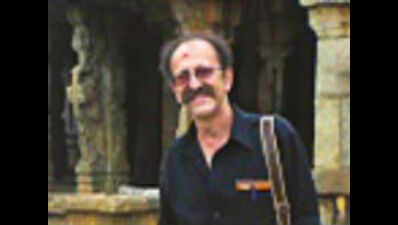
David Shulman's latest book published in 2015 has an amazing title 'More Than Real: A History of the imagination in South India'. In his preface, Shulman says, "All the great civilisations, and probably all human societies, have known that human beings are capable of imagining; India merely cultivated this art, or faculty, more boldly than most."
Elaborating further, he writes that in premodern South India imagination played a central role in what the people thought of the universe, the self and the mind.

In retrospect it appears that Shulman, as a scholar of South Indian folklore, literature, religion, philosophy and history, has always been interpreting the imaginary worlds of south Indians and discovering intimate truths about their inner lives. His celebrated early work, 'Tamil Temple Myths' sought to explain the central motifs that define our religious life. Collating oral and written sources of 'talapuranams' (site histories) in TN, Shulman unearthed that sacrifice is a primal and pervasive theme in Tamil temple mythologies. The talapuranams equated goddesses and the women to the earth and created sacredness to the localities that are pacified by the grace of the feminine. According to Shulman, the goddess in our temples invites us to have a sense of belonging with the place through its beauty and purity. The bhakti expressed in the talapuranams is not concerned with the ultimate release or moksha but it is concerned with the Tamil affirmation of the self, person, and life by engaging in relation with the divine, a relationship often expressed in sensual terms. For instance, the myth of the Ekambaranathar temple in Kancheepuram, is an example of not only sacredness but as a symbol of sensual love between Shiva and Parvati.
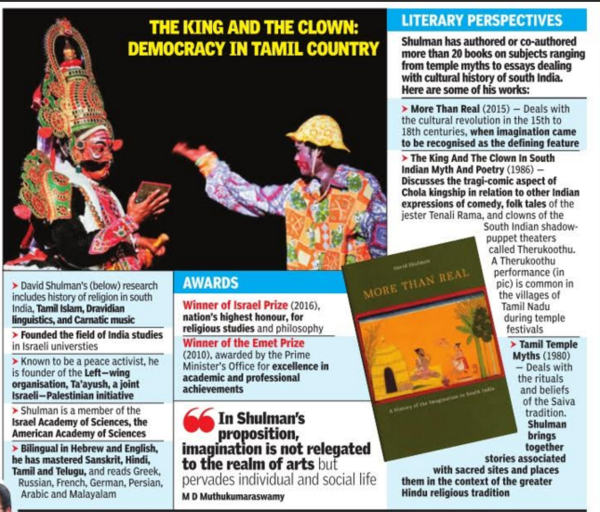
In his book 'The King and the Clown in South Indian Myth and Poetry' Shulman declared that he was going to reveal the "inner world of feelings and ideas" of Tamils. Shulman discovered that the power invested in the Tamil kingship was weak and nebulous. Though a king, his relationship with his double, the clown who thrives on tripping with king with comic wisdom, provided a democratic critique of kingship. Collaborating with Velcheru Narayana Rao and Sanjay Subrahmanyam for 'Symbols of Substance: Court and State in Nayaka Period Tamil Nadu', Shulman argued that the definitive feature of the Nayaka state was its fluidity and that throughout its rule the kingdoms of Thanjavur, Senji, and Madurai were in the processes of becoming.
As a translator, Shulman excels in communicating the uniqueness of the original author. 'In Songs of the Harsh Devotee: The Tevaram of Cuntaramurtinayanar', he distinguishes the poetic voice of Sundarar from that of Appar and Sampanthar and writes that his voice, unlike theirs, is "complex, probing, characterised by internal tension, often angry or antagonistic to the deity addressed, bitterly personal, extreme in tone - in a word 'harsh' as the Saiva tradition has always recognised".
It is the Saiva tradition Shulman has taken to forums of comparative religion and spirituality. Co-editing a volume on 'Self and Self-Transformation in the History of Religions', Shulman wrote that Tamil Saivism offers a rich programme for self-transformation beginning with daily rituals which are meant to turn the devotee into Shiva. In another work co-edited with Galit Hasan Rokem, 'Untying the knot: On Riddles and Other Enigmatic Modes' Shulman contributed an insightful essay on Shiva's game of dice with his consort Parvati.
David Shulman's scholarly journey into south India is a karmic passage, as he himself would title one of his books, which has been suitably rewarded by the prestigious Israeli Prize.
The author is a folklorist
End of Article
FOLLOW US ON SOCIAL MEDIA





Hot Picks
TOP TRENDING
Trending Stories
In City
Entire Website
- 'Osama's 'dead son' is alive, leading al-Qaida in Afghanistan and has terrifying plans'
- Diljit Dosanjh’s Dil-Luminati India Tour: Check dates, venue, how to book concert tickets online
- Hamster Kombat Daily Cipher Codes and Combo Cards for September 13, 2024: Unlock up to 1 million coins
- Narayana Murthy faces backlash for parenting remarks on social media; users say, "after working 72 hours a week, there’s barely time left to have babies…”
- Shreyas Iyer comes out to bat wearing sunglasses, falls for a duck in Duleep Trophy
- iPhone 16 will be available for Rs 54,900 on Apple website; here's how you can grab the deal
- iPhone 16 to go on pre-order today: Pre-booking details, time, sale date and more
- Vande Metro launch date, schedule: PM Modi to flag off Bhuj-Ahmedabad Vande Metro train; check timings, stoppages of new Indian Railways train
- Why around 40,000 TCS employees have received tax demand notices for Rs 50,000 to over Rs 1 lakh
- Bill meant to usurp Waqf land, JPC told
- Despite debate win, Kamala Harris makes no dent in battleground states
- 2 Army soldiers killed in ongoing encounter in J&K's Kishtwar
- 'I was molested in ambulance in which my husband was fighting for life'
- 'Osama's 'dead son' is alive, leading al-Qaida and has terrifying plans'
- Sunita Williams, Butch Wilmore to vote for US election from Space: 'Very important duty'
- Preschools turn nursing homes, retirement age raised: China's demographic crisis explodes
- Are drone and rocket attacks the new normal in Manipur?
- Jhumka Gira Re ...: American woman's Instagram post on India goes viral
- Assam CM reveals how his 'doubt' unearthed multi-crore trading scam
- Vande Metro first look: Top 10 features of new train for common man

Popular Categories
Hot on the Web
Top Trends
Shannon Sharpes Net WorthVande MetroAadhaar Card UpdateTech LayoffsArvind Kejriwal BailShannon SharpeUPSC Mains Admit CardKristina JoksimovicTCS Employee Tax NoticesWay Chatgpt can be your Study PartnerAir Taxi IndiaAyushman Bharat SchemeKolkata Doctor Rape CaseDonald TrumpShreyas IyerDiljit DosanjhLive Cricket Score
Trending Topics
Alia BhattMalaika Arora Father DeathArbaaz KhanNatasa StankovicMr Bachchan OTT ReleaseNational Parks In IndiaSelena GomezGOAT CollectionVikas Sethi DeathMalayalam ProducersIndia's Best Dancer 4Simi GarewalDilli BabuIndian National ParksLaung BenefitsVikas SethiApple iPhone 16SpaceXAadhar Card Update By Sept 14Wordle Answer
Living and entertainment
Latest News
7. Hindi becomes officialKitchen Tips: How to elevate home cooking to Michelin levelJulie Chen to miss Big Brother live eviction for first time, taps Jerry O'Connell to hostTragic road accident on Mogili ghat road claims seven lives in Chittoor districtRaveena Tandon apologizes to fans for not photo snub in London: "It was not my intention to offend"Bonedi baris hope for a peaceful start to PujoPreschools turn nursing homes, retirement age raised: China's demographic crisis explodesTovino Thomas praises Prithviraj Sukumaran as director: "One of the brilliant directors I have ever worked with"Man shot near Delhi's Greater Kailash-I gym, gang war suspected'Cops stood as mute spectators': Protesting doctors write to President over RG Kar impasseFatal crash in Australia's Netherby claims life of ToddlerNASA to establish New Lunar Time Standard with Coordinated Lunar Time (LTC) initiativeDivya Bansal explores themes of human resilience, love and positive transformation in debut poetry bookWWE Superstar Cody Rhodes and his Wife Brandi Rhodes Share Special Messages on Their 11th AnniversaryAnupamaa: Anuj and Anu to go legal against Ankush and Barkha'Dead cat hanging from a tree': Origin of Haitian immigrants row. Everyone heard itTop 5 least private zodiac signsPerfect comfort foods for every zodiac sign
Copyright © 2024 Bennett, Coleman & Co. Ltd. All rights reserved. For reprint rights: Times Syndication Service